


From guesswork to growth: How Crafty built a data-driven content engine
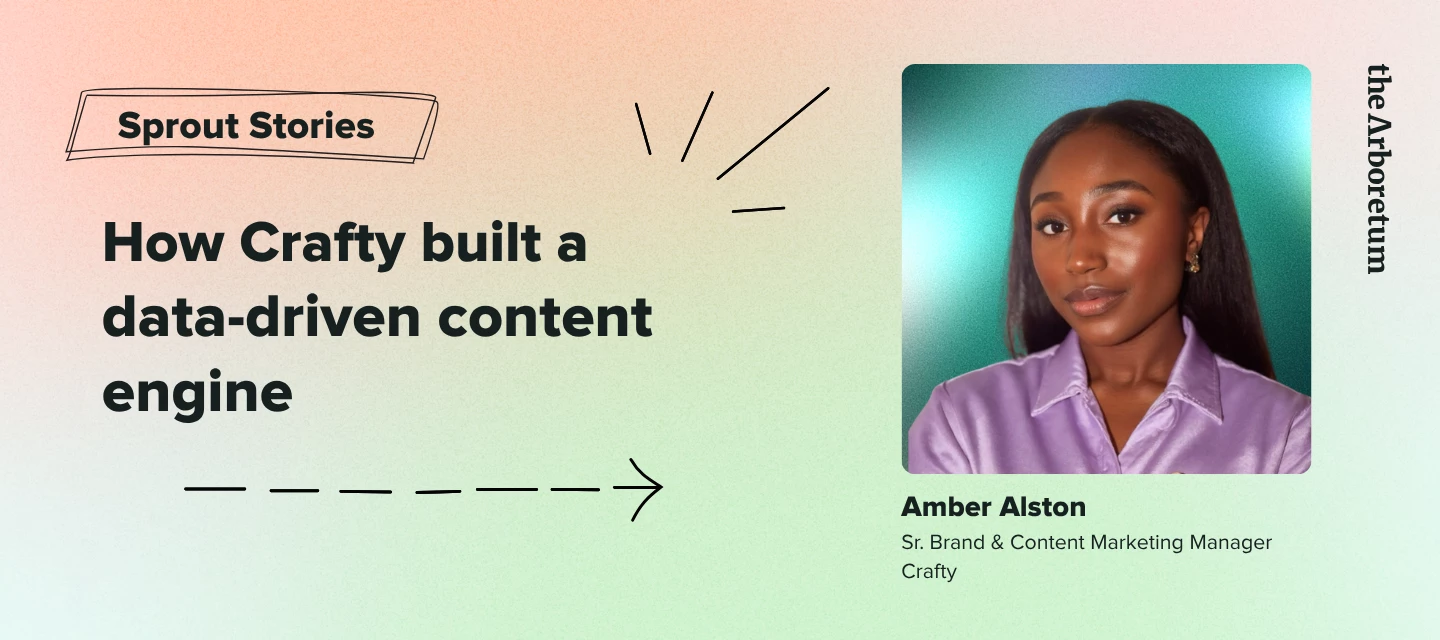
In our recent conversation with Amber Nicole Alston (
This is a unique, two-way story of engagement: while Sprout powers Crafty’s social strategy, Crafty powers Sprout’s on-site workplace experience through food and beverage. Together, it highlights how brands can shape how people connect and experience the workplace, both online and in the physical workplace.
Amber leads and manages the social ecosystem for Crafty, a national office food and beverage provider delivering workplace food programs and fully managed office pantry services. Her success in scaling Crafty’s digital footprint—highlighted by a 1,915% increase in engagement—didn't come from ignoring her marketing intuition. Instead, it came from using Sprout to validate her team's expertise and prove what they already knew to be true.
Here is her blueprint for how to layer data over years of experience to build a social presence that actually moves the needle.
Strategy over instinct
When Amber joined Crafty in 2022, social media efforts were ad hoc and distributed across teams, without a clear strategic owner. At the same time, the company had grown rapidly, creating a clear need for a more strategic and cohesive presence. Starting in 2023, her focus was to build and operationalize Crafty’s social ecosystem, with each platform—LinkedIn, Instagram, and others—serving a distinct role across brand awareness, lead generation, and community building.
By implementing Sprout, the team didn't replace that expertise; they gave it a foundation. The ability to compare cross-network performance data on a recurring basis allowed them to validate what was working, refine strategy and confidently scale their most successful tactics.
“Sprout has enabled us to move from reactive posting to a predictable, insight-led content system where we can test, learn and scale what works with confidence.” - Amber Nicole Alston, Sr. Brand &Content Marketing Manager, Crafty
The how
To achieve their massive growth Amber focused on building a strategy informed by data and executed with purpose and precision. Here’s how she did it:
- Identifying LinkedIn as a primary driver: By using the Profile Performance and Post Performance reports, Amber validated her intuition that LinkedIn was their strongest channel.. The data showed that the platform consistently outperformed close competitors in engagement rate, even with lower posting volume. This gave them the green light to shift LinkedIn from a support channel to a primary distribution platform, focusing on high-utility, saveable formats like frameworks and carousels that their audience could reference and return to.
- Scaling edutainment via video: Through Tag Performance reporting, Amber identified a clear opportunity in “edutainment.”” By tagging content themes like Snack Hacks or leadership points of view, they found that educational and insight-led videos consistently outperformed trend-based content in both retention and saves. By leaning into more of this content type, the Crafty team grew their video views by 260x.
- Humanizing the brand through storytelling: Data from Sprout Post Performance reports also gave Amber the confidence to lean into human, story-driven content for their 10-year anniversary campaign. Rather than focusing on dry business milestones, they shared archival photos of the founders and personal stories from early employees. The result was one of their highest-performing periods on record, performance that sustained even during December, a month when B2B engagement typically slows down.
- Monitoring micro-shifts in behavior: While many brands wait for broad industry trends, Amber reviews Sprout reports daily to track micro-shifts in audience behavior. By pairing Tag Performance and Campaign Reports with real-world signals from client success interactions, Crafty can act on audience shifts early and turn them into intentional content strategies.
- Validating relatability with memes: Performance data in Sprout showed that memes were more than just one-off jokes; they were a repeatable format that humanized the brand and increased relatability. This validation led Amber to intentionally incorporate memes into their broader content mix to show they are tapped into the same cultural moments as their audience.
By layering data over her existing expertise, Amber has turned Crafty’s social presence into a tangible business advantage. Beyond the engagement rates, social insights now help the business address the same questions and hurdles their sales and client success teams hear every day. Today, both prospective clients and job candidates regularly tell the company that Crafty’s social content was the primary reason they reached out, making content a meaningful driver of pipeline and talent acquisition By using data to back a human-first strategy, social media has moved from a creative experiment to a core reason people choose Crafty over a competitor.
How are you navigating the shift from reactive to intentional? Does your team have a clear pulse on what resonates with your audience, or are you still searching for those repeatable patterns? Drop your thoughts in the thread, we want to hear how you are using data to build upon your own expertise and expand the impact of your strategy.