


How Moburst scales influencer marketing through high-accuracy data
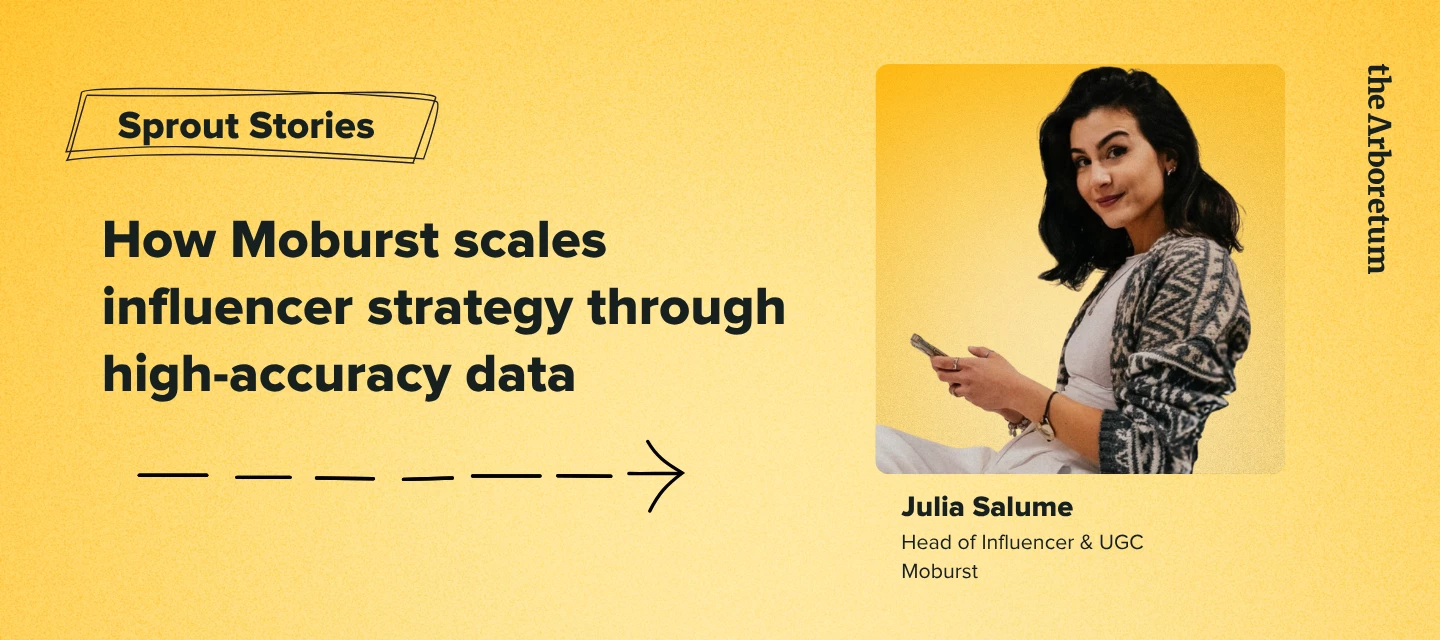
In our recent conversation with Julia Salume (
Julia leads the influencer and UGC strategy for Moburst, a global agency that lives and breathes data. Her success in scaling their practice didn't come from just finding more creators—it came from reclaiming the hours her team was losing to an administrative manual tax. By trading fragmented spreadsheets for high-integrity data, Moburst has managed a 71% increase in campaigns while simultaneously decreasing sourcing hours by 33%.
Here is her blueprint for how to scale an influencer practice without sacrificing data quality or team sanity in the process.
Accuracy over admin
Moburst knows that their clients value transparency over marketing fluff. For Julia, the turning point came when their previous platform began reporting impossible engagement rates. Upon discovering the math was flawed, she made a definitive call to move the team back to manual verification until they found a partner that took data as seriously as they did. By shifting the strategy from manual triage to automated first-party data, the team has returned over 30 hours a week to their creative strategy.
"I realized we had finally found a partner in Sprout Social who took data quality as seriously as we did. We could indeed adapt this per platform and customize many other metrics." — Julia Salume, Head of Influencer and UGC at Moburst
The how
Julia’s team uses a specific process to bridge the gap between massive scale and pinpoint accuracy:
- Identifying blue ocean opportunities: The team uses Social Listening to identify segments with high engagement but low brand competition. For a language learning app, Julia used the hashtag #LearnEnglish to discover that while YouTube had the highest post volume, Instagram and TikTok had significantly higher engagement rates. This blue ocean insight allowed them to pivot away from long-form noise toward high-impact short-form content.
- Semantic search and niche discovery: Sourcing used to be limited by rigid keyword searches. By using Semantic Search to describe specific niches and creator types, the team opened up a wider world of possibilities, allowing them to find the right partners faster without sacrificing the quality of the match.
- Timing the market with listening: By analyzing conversation peaks, Julia’s team identified a massive spike in language learning discussions aligned with the back-to-school season. This allowed them to pre-position fresh content to go live exactly when audience demand peaked, rather than reacting after the trend had passed.
- Streamlining the pitching process: The team moved away from keeping thousands of open tabs and manual screenshots to compare creators. By importing candidate lists directly into the One-Sheet Builder, they’ve turned a painful administrative task into a professional experience that accelerates client approvals.
- Automating transparency with first-party data: Trust is built on data quality. By using the Collaborator Report to pull metrics directly from creators, the team saves an average of two hours of manual admin per client every week. This reclaimed time is reinvested into building closer relationships with talent and adapting trends to their campaigns in real-time.
By prioritizing integrity over simple output, Julia has turned influencer marketing into a high-velocity growth lever. This success is rooted in a collaborative feedback loop; as our platform evolves, we work closely with the Moburst team to ensure they have the precision they need to overachieve campaign goals.
What is the manual tax costing your team?
Are you spending 30 hours a week on manual data collection just to ensure accuracy, or do you have a pulse on the metrics that actually move the needle? Drop your thoughts in the thread—we want to hear how you are balancing data integrity with real human connection.