


How Datadog layers social intelligence into corporate strategy
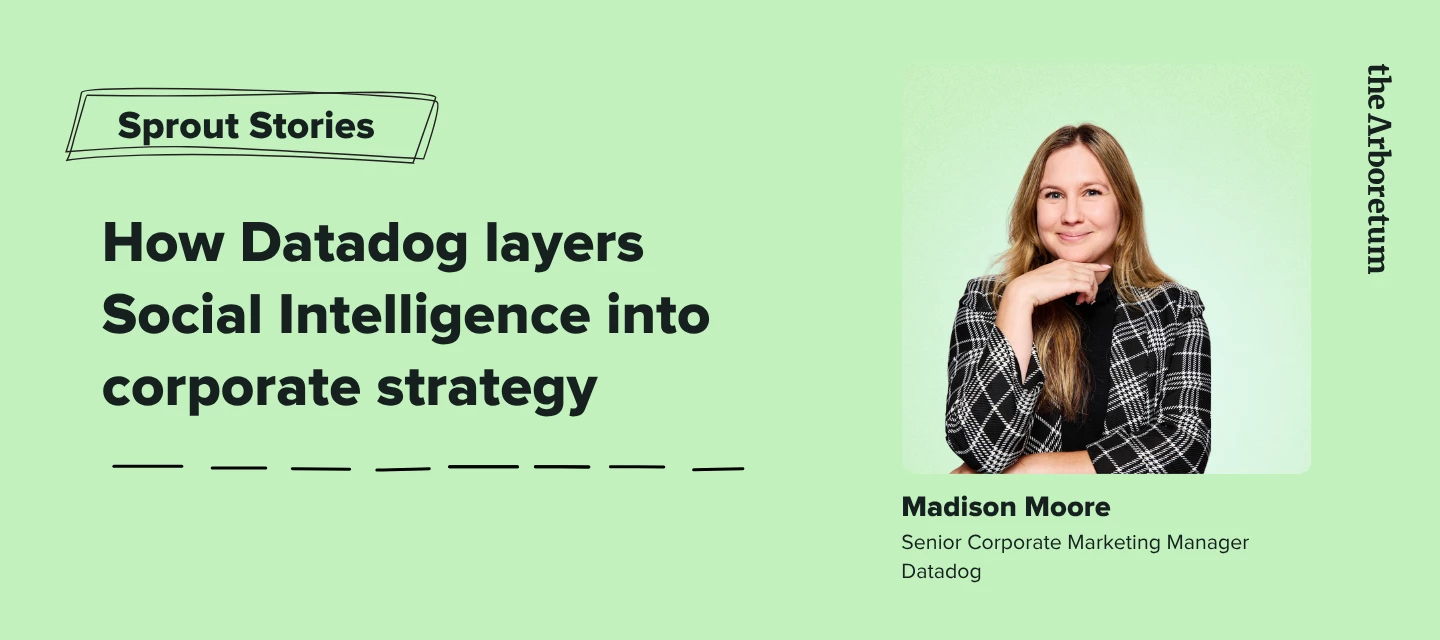
In our recent conversation with Madison Moore, (
Here is her blueprint for moving beyond vanity metrics to become a trusted advisor for executive and technical teams alike.
Moving from reactive to proactive
Like many practitioner-leaders, as she’s progressed her career, Madison’s remit on social media has evolved from simply managing a feed to leading entire communications strategies. With a background in journalism, she views her role as a storyteller who must connect audience needs to executive priorities. By leading with conviction and data-backed insights, she has moved social into a proactive space where it directs the broader business narrative.
“Social Intelligence is about becoming a trusted partner. You have to come with real data and a consultative approach that layers your expertise on top of that data.” — Madison Moore, Social Media Lead at Datadog
The how
Madison and her team focus on workflows that turn a high-volume of content into high-value community engagement:
- Eliminating guesswork in video: The team has shifted toward deeper engagement signals like watch time and organic video views. By integrating YouTube performance into their social strategy, they have eliminated guesswork and created a unified story between the video and social teams. This ensures the brand tells a single story of success and opportunities internally rather than operating in silos.
- Maximizing video segments for engagement: For their highly produced product update series, the team uncovered that standard teasers weren't driving deep connection or engagement. By using video reports to identify high-value segments, they shifted from short product update segments to sharing clips that highlight thought leadership from product leaders. This insight-led approach has already led to increased comments and shares from their community, as well as doubling organic video views.
- Building custom intelligence for internal teams: Rather than handing over raw numbers, Madison builds custom reports tailored to specific needs, such as campaign reports for product marketing or event reports for Datadog Summits, the global community events that give the company direct access to educate and engage their users. These reports include summaries that provide the bigger picture, giving cross-functional directors the context they need without adding extra strain on the social team.
- Streamlining technical community engagement: With a technical audience of developers and engineers, the team uses custom views and automated rules to filter out noise and spam. By setting up alerts in the Smart Inbox, they can instantly identify high-value conversations, technical product feedback, or rising bugs that require immediate attention.
- Humanizing the escalation process: Social is not always the best place for a technical response. Madison is building a streamlined escalation process to ensure customer questions reach the right person and opens the door to responses on other, more direct, channels. By using automated tagging to track volume and sentiment around feature requests, service disruptions, and customer sentiment, the team can pull accurate reports while ensuring product marketing experts are put in front of specific customer concerns.
The business impact
By layering Social Intelligence into internal communications, Datadog has turned social data into a strategic asset. Madison has moved the needle by proving to colleagues across the business that social is a source of intelligence, not just a distribution channel. This approach has enabled her team to become a trusted advisor to the business, guiding broader conversations in cross-functional teams while ensuring that every piece of content is aligned with a strategic purpose and delivered to the audience most likely to act on it.
How are you positioning social as a decision layer in your business?
When you share insights with your executive team and cross-functional partners, what workflows help you move from a reactive report to a proactive consultation? Drop your thoughts in the thread—we want to hear how you use audience data to build confidence across your business.